
"Police at the Door" Know Your Rights Poster
We created this poster to provide an actionable set of steps for folks to follow if any government agents are at your door (FBI, ICE, DHS, local cops, etc).
Legal Disclaimer: This is general information, not legal advice. Consult a lawyer for advice about your situation.
Using the poster
Print the poster. See the download links below.
Learn more about your rights when an agent knocks. This poster isn't meant to educate you on your rights, it's meant to remind you of your rights and the steps to take in a moment that is probably very stressful.
Pick your primary emergency contact. Write their phone number on the poster.
Inform your primary emergency contact person of what steps you would want them to take if you contact them in an emergency. Write it down for them so they can remember if needed. Examples: contacting local movement legal support, contacting your employer, contacting other friends/family, contacting other people you organize with.
Identify local legal support and write their number on the poster. This step usually takes more effort. If you're connected to local social movement folks, they may have advice about local legal hotlines or movement lawyers. Consider reaching out National Lawyers Guild, Civil Liberties Defense Center, Electronic Frontier Foundation, or your local ACLU chapter for support.
Practice: Have someone role play a situation where a government agent is knocking on your door and "just wants to talk." Practice saying the "magic words."
More activist security guides: Make sure to check out our other checklists: Digital Security Essentials, Protest Security, and Signal Security Checklist.
Download the poster
Poster last updated: October 8, 2025
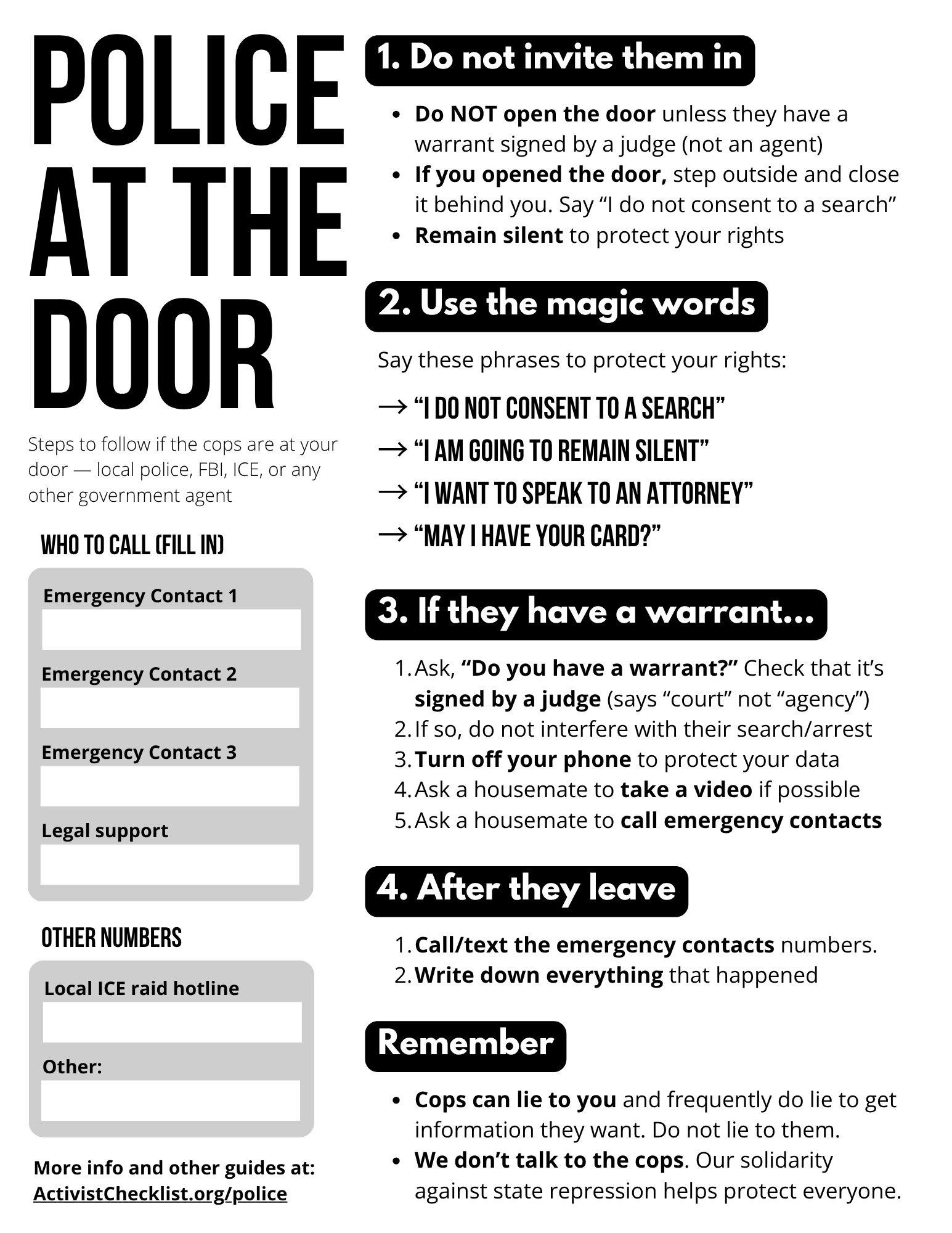 (Credit: Shout out to Bay Area Anti-Repression Committee and CLDC for inspiring this poster.)
Using your phone vs protecting your data:
There is an inherent tension between multiple possible choices in the moment the cops are at the door:
Taking a photo of the warrant (if applicable)
Calling your emergency contact to activate legal support
Keeping your phone locked (or ideally turning it off) to protect your data
Filming the interaction so you have evidence of any crimes the police might commit.
You can't do all of these things at the same time.
We chose to prioritize turning off our phone since protecting your data is important for movement leaders and those most at risk of targeting. However, one of the other options may make more sense for you.
Filming: If your biggest concern is the abuse you might face from the agents, filming may be worth it. Ideally someone else in the house could film and call for you while anyone at risk turns off their devices, but that is not always possible. If someone does film, use the camera button from the lock screen to start the video, rather than unlocking your phone first, that way your data is more protected if they take phone.
To be aware of
No-knock warrants: If the cops do have a proper warrant, they will most likely not knock and will instead force their way in. Telling you do not consent to a search is helpful even if though they will continue with their search. If you try to physically stop them, you could be subject to charges.
Know you rights song!
In case you want to get a song stuck in your head that reminds of what to do when the cops are at the door, here is this:
Learn more
Long "know your rights" guide from Center for Constitutional Rights
Multiple know your rights guides from National Lawyers Guild